It’s not a motivation issue. It’s a systems issue.
Discover how to automate your daily social media tips, maintaining quality and unique tone without repetitive AI. Build a reliable content engine for consistent presence.
It’s not a motivation issue. It’s a systems issue.
As a business owner, you know the cycle: you go hard for a week, then client work kicks in, the content well runs dry, and your feed ends up being hasty posts or nothing at all.
And if you try to hack the system with AI, you wind up sounding like everyone else, saying the same shallow things over and over, and teaching your audience to tune you out.
What you really need is a repeatable and reliable engine. In this post, I’ll show you how to automate your daily social media tips in a way that preserves quality, tone and context. Your ultimate aim is to create a tip funnel that:
- catches your ideas when they are fresh
- organizes them into social media posts in a standard format
- maintains your tone of voice and prepares them in advance, so you can keep up the stream even in the busiest of weeks.
In this article I will show you my process for automating a daily tip series without resorting to bland, repetitive, AI content.
You’ll automate the bulk of the process with a tip engine, and retain just enough of a human touch to where it counts the most: the final fact-check, tone-check and context-check.
That’s the secret to daily consistency without losing authority, personality and effectiveness.
As a baseline for where your audience actually is, Pew Research Center’s 2025 social media use data shows 84% of U.S. adults say they ever use YouTube and 71% say they use Facebook, with about half visiting Facebook at least once a day, which is why daily programs can work when they’re done right.
Create an endless supply of Daily Tips
To generate daily social media tips without making a content mill, you need a source of truth.
Treat tips as an asset library, not a drafts queue.
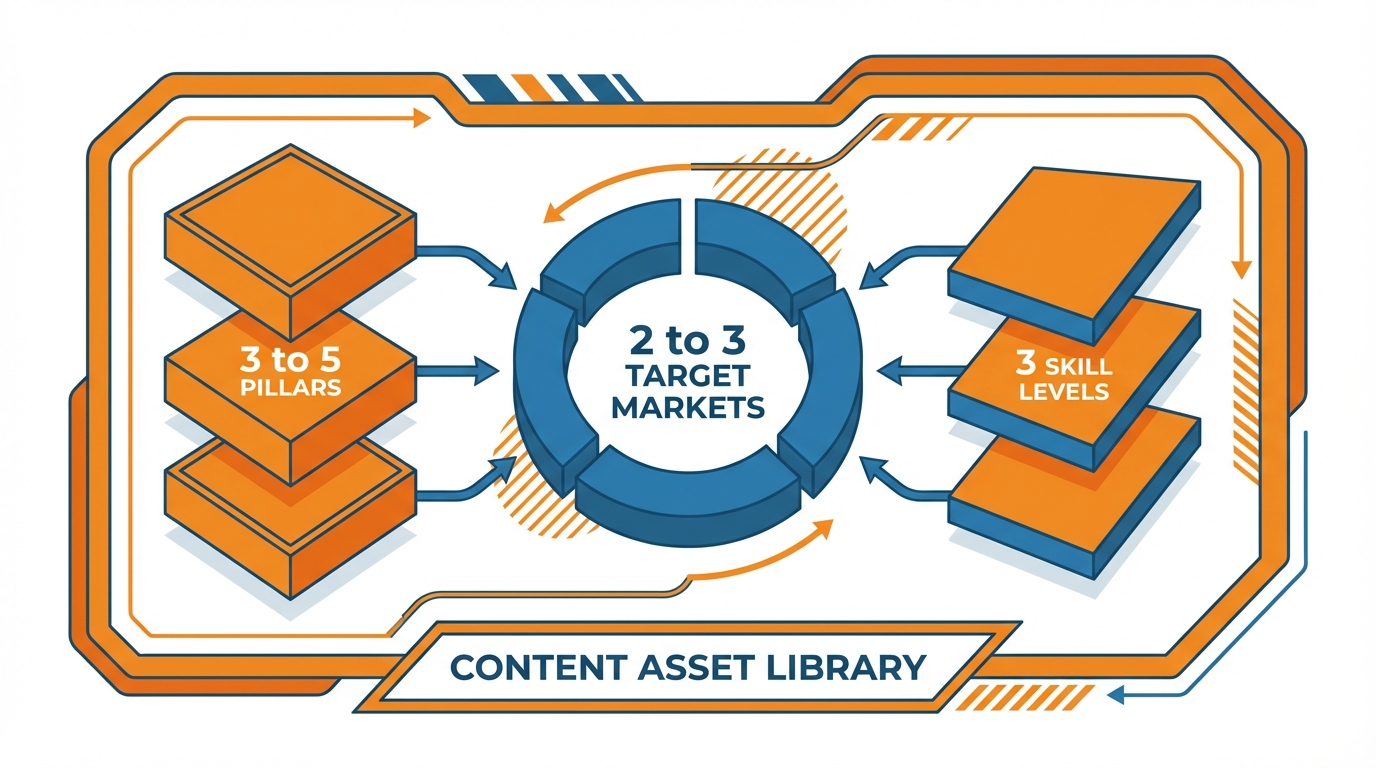
You create a simple taxonomy that aligns with how small businesses sell: 3 to 5 “pillars” you want to be famous for, 2 to 3 “target markets” you serve, and 3 “skill levels” from quick win to advanced.
Once you have the grid, you never struggle with what to write because you are filling out a system, not searching for inspiration.
Then, save each tip using the minimum amount of information it takes to publish it anywhere.
You need:
- one core tip in the form of a single, easy-to-understand sentence,
- one hook that grabs readers’ attention in the first line,
- one fast example to show how to apply the tip in practice,
- one CTA line to let readers know what to do next,
- and one ‘best fit’ format label such as ‘short text’, ‘carousel’ or ‘short video’.
I keep the number of fields small because speed is important and the same tip can be used across different platforms by changing just the hook or example, keeping the core tip intact. If you want help turning a core tip into ready-to-post drafts, an AI social media post generator can speed up those variations while you keep the core tip intact.
Another key feature of the library is that I add a ‘freshness’ rule to prevent it from ever being completely repetitive.
I note the date that each tip was posted and assign a ‘similarity’ value to it, so I can prevent posting the same thing again even if the language is different.
A good guideline is that anything too similar should be locked out within 45 to 60 days on the same medium, since people remember things more than you give them credit for, especially in daily programs.
I also cycle out by pillar and difficulty so your content rotates between quick tips, richer education, and evidence-based illustrations.
However, once you have your source of truth, automation is easy because you’re not inventing posts on the fly, you’re choosing from a library and customizing for channel.
And this is where something like WoopSocial comes into its own, as you can take your pillars and tip fields, and produce consistent, on brand daily posts in minutes, reserving your human bandwidth for the last pass fact-check and tone check.
So you end up with a daily tip factory that can grow as your business grows, not fall over the minute your client work gets going.
Take inputs from the real world and turn them into a limitless stream of tips
Looking for a way to mechanize daily social media tip production without coming across as robotic?
Quit attempting to generate ideas on a blank slate and start mining from sources where your audience is already demonstrating intent to buy.
Get into a quick and dirty daily routine of combing through:
- customer emails
- sales call notes
- DMs and comments
- support tickets
- reviews
- and even internal documents and standard operating procedures.
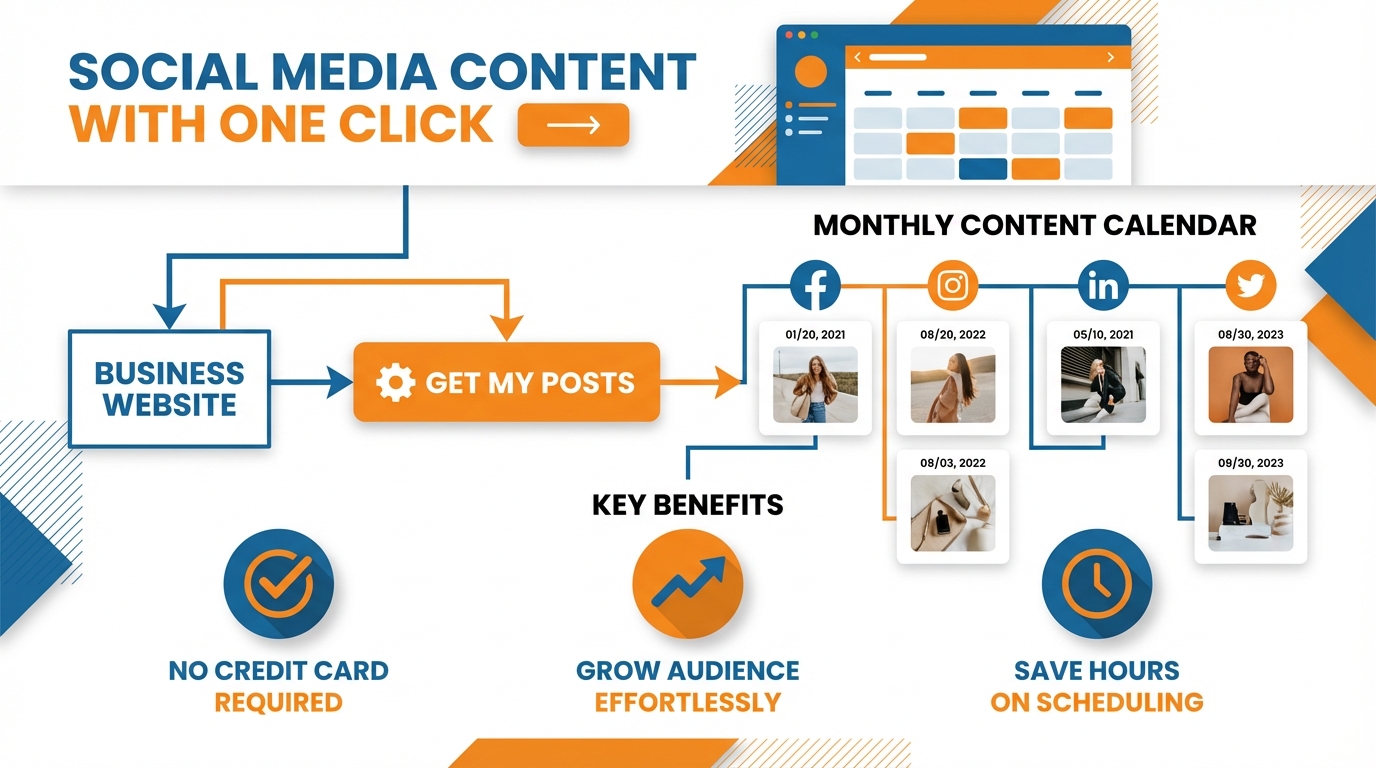
These are chock-full of the words people use when they are confused, resistant, budget-sensitive, and ready to buy, and it’s pure gold for content because it has inherent relevance and urgency.
To make this process repeatable, there is one simple rule you must follow: whenever you find yourself answering a question, overcoming an objection, or witnessing a repeated error, you document it as a potential tip that very day, while it’s still fresh in your mind.
Then you distill it into a single micro-tip that addresses one micro-problem in less than a 20-second read.
I achieve this by letting the initial language act as the hook and then responding with a specific to-do and a little example, so that it feels more like an actual tip and less like an inspirational poster.
Going forward, you’re not thinking of more topics, you’re merely recycling what your marketplace is already requesting.
Second, transform depth into rhythm by tying each daily tip to a single robust long-form resource.
Choose a blog post, video, or FAQ that covers something meaningful, then derive 30 micro-lessons from it: one per day, each covering a single decision, error, or hack.
The key benefit is additive insight: when you share a month of tips that all build on a single theme, your audience perceives coherence and authority, and you lower the danger of posting erratically and aimlessly.
As a rough guide, a good 1,500-2,500 word article will usually contain 25-40 specific lessons, if you seek out definitions, tasks, caveats, anecdotes, and counterarguments.
If you have an intake stream going and a regular micro-content production cadence, then automation is less likely to result in gibberish, since it has relevant input.
Then you can take those questions and micro-lessons and feed them into an automation stack that makes them consistent on-brand content for a daily post, and you can spend your human time on the last touch of fact-check and tone-check.
A tool like WoopSocial can be used to rapidly produce a month’s worth of content from source content and ensure the tone remains consistent, so you’ll never run out of posts, but not make your content feel spammy. For example, if your daily tips are primarily short-form, an AI caption generator for Instagram can help generate hook variations quickly while you keep your voice lock in place.
Create and schedule in my voice, automatically
You can delegate the creation of daily social media tips without diluting your content down to bland content, as long as you know how to divide the labor.
Automated solutions are perfect for repetitive production decisions: generating variations on a hook, adapting the same tip for different platform guidelines, and scheduling posts in advance so you don’t have to pause your workflow each day.
You need to take responsibility for the handful of decisions that safeguard quality: Is this advice accurate? Is it detailed? Is it written in my voice?
With that division of labor, small businesses can benefit from the predictability of automation without losing any authority.
That’s the control point and it is human-in-the-loop, so that’s gotta be a hard stop.
And there’s a simple voice lock, which is five to seven writing principles of how I speak, not how a brand should speak.
So that might be, how long are my sentences?
How straight am I?
Do I use numerals?
Things that I never say, things that I always say, like a concrete example, something like that.
I keep it as small as possible because it saves editing time, and also it prevents the failure state of, you know, this thing is automated, and slowly over the course of a month, it turns your account into sounding like every other account.
Third, you quantify automation rather than abdicate it.
You could, for example, generate a month's worth of tips, then incrementally change one thing at a time (e.g. type of hook, type of example) and test to see what changed behavior.
A 0.5 percentage point increase in profile views per tip doesn't sound like a lot, but it becomes a noticeable difference over 30 posts, and tells you what your users really respond to.
You iterate faster because automation allows you to generate more, and you iterate better because having more gives you more data to act on.
If you want to be fast without sounding like a robot, find a system that allows you to create a month’s worth of valuable tips in a short time that is on-brand in terms of tone, and applies your visual branding automatically so it all looks like your company created it.
I make sure that automation handles the grunt work and that I’m the only one approving and I’ve found that something like WoopSocial does that effectively by creating different variations of the same thing on-brand that I can then review and curate.
If you want a broader walkthrough of this approach, the social media automation guide pairs well with building this kind of daily pipeline.
Also note that not all “automation” online is helpful: a 2023 arXiv study on Twitter bots in science dissemination analyzed 3,744,231 papers and 51,230,936 Twitter mentions, finding 11,073 accounts (0.23% of total users) exhibited automated behavior and contributed 4.72% of all mentions, which is why the human-in-the-loop stop matters.
Let’s keep the series going: monitor what a daily tip program is really for.
To schedule daily social media tips without being an annoying background hum on the feed, you need to measure tips differently than your typical content calendar.
Tips aren’t really click-generators. They’re trust-generators.
So you want to track save, share, profile visit, and follow rates per post, rather than clicks alone.
The easiest way to start doing this is by pulling up your last 30 posts and calculating save and follow rates (i.e. number of saves per 1000 impressions, etc.), and then identifying your top 20% of posts and seeing what you can learn. If you want to put numbers on this faster, an engagement calculator can help you quantify the outcomes you’re already tracking.
Split it by job-to-be-done next, since mixing objectives masks what’s effective.
Now you have 2 categories of content: retention tips and click posts.
Retention tips need to be saved and shared, so they must be self-contained, tactical, and can be used without exiting the app.
Click posts can tease and drive traffic.
If you force each post to do both, you probably end up with neither: less saves because the tip isn’t comprehensive, and less clicks because your audience doesn’t trust you yet.
You want your weekly report card to mirror that split, meaning you pit retention tips against each other, not against posts designed to get clicks.
In order to continue compounding, try one little experiment a week and just test one variable.
For example, test hook styles (problem-first vs outcome-first), post length (40 to 80 words vs 120 to 180 words), structure (example-first vs tip-first), or CTA styles (ask for a save vs ask a question).
I’ve seen little wins like a 0.5 percentage point in profile visits per tip add up over 30 tips because of the compounding, so keep up the experimentation, not just the content creation.
Lastly, make sure that measurement is driving publication.
If a pillar is getting more follows but less saves, sharpen up the examples and make the advice more actionable; if it’s getting saves but not follows, sharpen up the first line to make clear who the tip is for.
And, when you’re doing it at scale, a brand-locked workflow in a tool like WoopSocial makes it easier to create enough options to test, while you do the human work that matters: picking what to do more of next week.
For context on what “good” can look like across platforms, Rival IQ’s 2023 benchmark report analyzed more than 5 million posts and 9 billion interactions, reported a median TikTok engagement rate of 5.69%, and noted Instagram engagement rates fell by about 30% YoY-so measuring the right action (saves, shares, profile visits, follows) matters even more when baseline engagement shifts.
The idea of automating the Daily Tip is to remain consistent, and compound on quality.
Done correctly, the benefit of automating daily social media tips isn’t just that you post more; it’s that you post with the kind of regularity your audience can truly sense.
You go from appearing in fits and starts to appearing like a steady hum.
That regularity is one of the most powerful tools a small business has: it tells the algorithm to regularly expect you, and it tells your audience to trust you.
The back-of-the-napkin calculation is mercilessly efficient: if your typical follow rate is 0.3% per tip, and you post 30 tips a month, you’re gaining 90 new followers for every 100,000 impressions.
If you bump that follow rate up to 0.45% by using better hooks and simpler examples, you’ve just increased your growth rate by 50% without increasing your posting schedule.
That’s exponential quality, not quantity.
To make daily feel easy, not hard, it’s all about the order in which you architect the system.
You need to have a robust tip vault to be selecting and refining, rather than inventing under the gun.
You need to have an input system to be capturing genuine audience requests so your tips stay relevant, timely, and commerce-related, not generic advice anyone can post.
You need to have a creation-to-scheduling process that includes a human quality check to ensure each tip checks three boxes: right, useful and voicey.
And you need to have analytics that are custom-built for a tip series because tips are measured on saves, shares, profile visits and follows per 1000 far more than clicks.
Here’s how to start building a scalable system around this next week:
Take one pillar, and go on a 7-post run addressing one specific micro-pain point that you know comes up on repeat.
And then test ONE variable:
Maybe the core advice is always the same, but you alternate between science vs. story hooks.
Or you try examples that are personal, vs. professional.
Compare the follow through rate, or save rate, of the 7 posts:
Even if you only get 0.5 more profile visits from each one over 30-90 posts that’s a big difference.
More importantly, you now know what actually WORKS for your audience vs. what you think they might like.
Approach this as you would product development:
You should get a clearer picture every month of what pillars, formats, and tone gain trust the fastest.
Once you nail those 4 elements, daily stops being a commitment you have to fulfill and becomes a machine that you keep lubricated.
You’re not trying to go everywhere, you’re trying to be useful, and usefulness compounds.
If you want to automate daily social media tips without losing that human touch, automate the decision-making and save your brain for the review and weekly trial.
In that sense, a brand-locked pipeline in WoopSocial also comes in handy, because it will save you time on the production side, but still allow you to be the editor-in-chief, and that is what will save your brand.
Teen behavior reinforces why consistency and relevance matter across age groups too: Pew’s 2024 teen report found 73% of teens say they go on YouTube daily, about six-in-ten teens visit TikTok daily, and one-third use at least one platform almost constantly, which raises the bar for tips to be self-contained and genuinely useful in-feed.
Related reads
5/8/2026
The 7 best Blotato alternatives for developers - cheaper pricing, better API and feature comparison
Blotato is an AI-powered platform that allows you to create content and distribute it to different social media platforms. It also works as a unified social media API, which means you can run it with your AI agents to automatically post to social media.
5/7/2026
The 8 Best Bundle.Social Alternatives - Faster, Cheaper and Better Social Media APIs
Bundle.social offers a single endpoint to post to multiple social media platforms. It is also known as a unified social media API or a social posting API.
5/6/2026
The 7 Best Outstand Alternatives In 2026 - Cheaper, Reliable and Faster Social Media APIs
Outstand is a unified social media API that allows you to post to many social media networks through a single endpoint. Instead of having to build integrations for each of these platforms, you can now just build a single one and get started much quicker.